
If you’ve recently been diagnosed with diabetes, told you have prediabetes, or simply want to understand what diabetes really is, you’re not alone. Diabetes affects millions of people worldwide, yet it remains one of the most misunderstood chronic health conditions.
The good news is that diabetes is a condition that can be understood and, in many cases, managed very successfully. Learning the basics is the first step toward making informed decisions about your health.
This beginner’s guide explains what diabetes is, how it affects your body, the different types of diabetes, common symptoms, treatment options, and what you can do next if you think you may have diabetes.
Quick Answer: What Is Diabetes?
Diabetes is a long-term condition that affects how your body turns food into energy. Normally, insulin moves glucose from your bloodstream into your body’s cells. With diabetes, this process no longer works properly, causing blood sugar to rise. Without treatment, high blood sugar can gradually damage many parts of the body, but with proper care, most people can successfully manage the condition.
Over time, high blood sugar can damage your heart, kidneys, eyes, nerves, and blood vessels if it is not properly managed.
Key Takeaways
- Diabetes is a condition that causes blood sugar levels to become too high.
- Insulin helps move glucose from your bloodstream into your body’s cells for energy.
- The main types of diabetes are Type 1 diabetes, Type 2 diabetes, prediabetes, and gestational diabetes.
- Many people live long, healthy lives with diabetes through healthy eating, physical activity, medication when needed, and regular blood sugar monitoring.
- Early diagnosis and treatment can greatly reduce the risk of serious complications.
How Your Body Normally Controls Blood Sugar
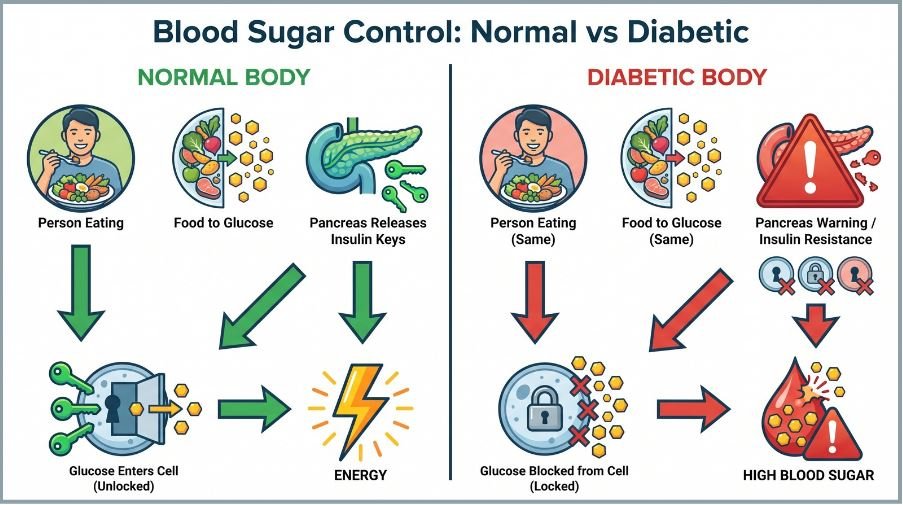
Every time you eat, your body breaks down much of your food into glucose, a type of sugar that serves as your body’s primary source of energy. Glucose enters your bloodstream and is carried throughout your body.
Your pancreas then releases insulin, a hormone that acts like a key. Insulin allows glucose to move from your bloodstream into your body’s cells, where it can be used for energy.
In a healthy body, this process happens automatically. Your blood sugar rises after you eat, insulin is released, glucose enters your cells, and your blood sugar returns to a healthy range.
What Happens When You Have Diabetes?
With diabetes, this system no longer works as it should.
Depending on the type of diabetes, your body may produce little or no insulin, or your cells may stop responding properly to insulin. Either way, glucose remains in your bloodstream instead of entering your cells.
Even though there is plenty of glucose in your blood, your cells cannot access it efficiently for energy. At the same time, the extra glucose circulating in your bloodstream can gradually damage blood vessels, nerves, and organs throughout your body.
This is why managing blood sugar is such an important part of diabetes care.
What This Means for You
Diabetes is not simply “having too much sugar.” It is a condition that affects how your entire body processes energy. Understanding this basic process makes it much easier to understand why healthy eating, exercise, medications, and blood sugar monitoring all play important roles in diabetes management.
If you are newly diagnosed, remember that millions of people successfully manage diabetes every day. Learning how the condition works is the first step toward taking control of your health.
The Main Types of Diabetes
Although all forms of diabetes involve problems with blood sugar, they are not the same condition. The cause, treatment, and long-term outlook can vary depending on the type of diabetes you have.
Understanding these differences can make conversations with your healthcare provider much easier and help you better understand your own diagnosis.
The table below summarizes the key differences between the four main types of diabetes.
| Type of Diabetes | What Causes It? | Who Usually Develops It? | Can It Be Prevented or Reversed? |
|---|---|---|---|
| Type 1 Diabetes | The immune system mistakenly attacks the insulin-producing cells in the pancreas. | Most often children, teenagers, and young adults, but it can occur at any age. | No. There is currently no known way to prevent or reverse Type 1 diabetes. |
| Type 2 Diabetes | The body becomes resistant to insulin and may eventually stop producing enough insulin. | Most commonly adults, although it is becoming more common in younger people. | Often preventable. Healthy lifestyle changes can reduce risk, and some people can achieve remission after diagnosis. |
| Prediabetes | Blood sugar levels are higher than normal but not yet high enough for a diabetes diagnosis. | Adults with one or more diabetes risk factors. | Often reversible. Healthy eating, regular physical activity, and weight loss can return blood sugar to a normal range for many people. |
| Gestational Diabetes | Pregnancy hormones make it harder for the body to use insulin effectively. | Some women during pregnancy, usually between 24 and 28 weeks. | Not always preventable. It usually resolves after pregnancy but increases the risk of developing Type 2 diabetes later in life. |
Type 1 Diabetes
Type 1 diabetes is an autoimmune disease. Instead of protecting your body, your immune system mistakenly attacks the insulin-producing cells in your pancreas.
Because these cells are damaged, your body produces little or no insulin. Without insulin, glucose cannot enter your cells and begins to build up in your bloodstream.
Type 1 diabetes can develop at any age but is most commonly diagnosed in children, teenagers, and young adults. It accounts for about 5% to 10% of all diagnosed diabetes cases.
People with Type 1 diabetes need insulin therapy every day to survive. It is not caused by eating too much sugar, being overweight, or making poor lifestyle choices. Researchers believe that genetics and certain environmental triggers both play a role, but the exact cause remains unknown.
If you would like to learn more, read our complete guide to Diabetes Types.
Type 2 Diabetes
Type 2 diabetes is the most common form of diabetes, accounting for roughly 90% to 95% of all diagnosed cases.
Instead of completely stopping insulin production, your body gradually becomes less responsive to insulin. This is called insulin resistance. To compensate, your pancreas produces more insulin, but eventually it can no longer keep up with your body’s needs.
As blood sugar continues to rise, Type 2 diabetes develops.
Several factors can increase your risk, including:
- Being overweight or obese
- Physical inactivity
- Family history of Type 2 diabetes
- Increasing age
- High blood pressure
- Certain ethnic backgrounds
- A history of gestational diabetes
The encouraging news is that many people successfully manage Type 2 diabetes through healthy eating, regular exercise, weight management, medication, or a combination of these approaches.
If you’d like to understand how insulin resistance develops, see our guide to Insulin Resistance Diet.
Prediabetes
Prediabetes means your blood sugar is higher than normal but not yet high enough to be diagnosed as Type 2 diabetes.
Many people have prediabetes without realizing it because it often causes no obvious symptoms.
The good news is that prediabetes can often be reversed. Losing a modest amount of weight, becoming more physically active, and improving your eating habits can significantly reduce your risk of developing Type 2 diabetes.
If you have risk factors, early testing can make a tremendous difference.
For more information, visit our article on Pre-Diabetes Symptoms.
Gestational Diabetes
Gestational diabetes develops during pregnancy in someone who did not previously have diabetes.
Pregnancy hormones can make it harder for your body to use insulin effectively, causing blood sugar levels to rise. For this reason, most pregnant women are screened between 24 and 28 weeks of pregnancy.
Gestational diabetes usually resolves after the baby is born. However, it increases the mother’s risk of developing Type 2 diabetes later in life and may also increase the child’s future risk of obesity and diabetes.
With careful monitoring, healthy eating, physical activity, and medication when necessary, most women go on to have healthy pregnancies and healthy babies.
Learn more in our articles on Gestational Diabetes Symptoms and Gestational Diabetes Diet.
Which Type of Diabetes Is Most Common?
For most adults who are newly diagnosed, the answer is Type 2 diabetes. However, only your healthcare provider can determine which type you have through your symptoms, medical history, physical examination, and laboratory testing.
Receiving the correct diagnosis is important because each type of diabetes requires a different treatment plan.
What This Means for You
Not every diabetes diagnosis is the same. Understanding which type you have helps explain why your treatment may differ from someone else’s.
If you’ve recently been diagnosed, focus on learning about your specific type rather than comparing yourself to others. With the right treatment plan and ongoing support, people with every type of diabetes can successfully manage their condition and lead full, active lives.
What Causes Diabetes?
The cause of diabetes depends on the type of diabetes you have. While all forms of diabetes affect blood sugar, they do not develop for the same reasons.
Some causes are outside your control, such as genetics or autoimmune disease. Others, particularly those related to Type 2 diabetes, involve lifestyle and other health factors that can often be improved.
Understanding what causes diabetes can help you better understand your diagnosis and identify steps you may be able to take to protect your health.
What Causes Type 1 Diabetes?
Type 1 diabetes is an autoimmune disease. Your immune system mistakenly attacks the insulin-producing cells in your pancreas until your body can no longer make enough insulin.
Researchers do not know exactly why this happens. They believe that genetics combined with certain environmental triggers, such as viral infections, may contribute.
Importantly, Type 1 diabetes is not caused by eating too much sugar, being overweight, or making unhealthy lifestyle choices. Nothing you did caused the disease to develop.
What Causes Type 2 Diabetes?
Type 2 diabetes develops differently.
Over time, your body’s cells become less responsive to insulin. This condition is called insulin resistance. At first, your pancreas produces extra insulin to keep blood sugar under control. Eventually, it can no longer produce enough insulin to meet your body’s needs, causing blood sugar levels to rise.
This process usually develops gradually over many years.
If you would like to learn more about this process, see our guide to Insulin Resistance Diet.
Risk Factors for Type 2 Diabetes
Although no single factor causes Type 2 diabetes, several things can increase your risk.
These include:
- Being overweight or obese, especially carrying excess weight around the abdomen
- Getting little regular physical activity
- Having a parent or sibling with Type 2 diabetes
- Being age 45 or older
- Having high blood pressure or abnormal cholesterol levels
- Having a history of gestational diabetes
- Having polycystic ovary syndrome (PCOS)
- Belonging to certain ethnic groups, including African American, Hispanic or Latino, Native American, Asian American, or Pacific Islander populations
Having one or more of these risk factors does not mean you will definitely develop diabetes. It simply means your risk is higher than average.
Can Type 2 Diabetes Be Prevented?
In many cases, yes.
While you cannot change your age or family history, healthy lifestyle habits can significantly reduce your risk of developing Type 2 diabetes or delay its onset.
Simple changes can make a meaningful difference, including:
- Maintaining a healthy weight
- Being physically active most days of the week
- Eating a balanced diet rich in vegetables, whole grains, lean proteins, and healthy fats
- Limiting sugary drinks and highly processed foods
- Getting enough sleep and managing stress
- Seeing your healthcare provider for regular checkups if you have risk factors
Even small improvements made consistently over time can have a positive impact on your long-term health.
What This Means for You
Many people blame themselves after being diagnosed with diabetes, especially Type 2 diabetes. In reality, diabetes is a complex condition influenced by genetics, age, hormones, environment, and lifestyle.
Rather than focusing on what may have contributed to your diagnosis, focus on what you can do moving forward. Healthy eating, regular physical activity, taking medications as prescribed, and monitoring your blood sugar can all help you successfully manage diabetes and reduce your risk of complications.
If you have not been diagnosed but recognize several of these risk factors, talk with your healthcare provider about screening. Catching diabetes or prediabetes early often leads to better long-term outcomes.
For more information about recognizing possible symptoms before diagnosis, read our guides on Warning Signs of Diabetes and Pre-Diabetes Symptoms.
Common Symptoms of Diabetes
Diabetes does not always cause obvious symptoms, especially in its early stages. Many people with Type 2 diabetes have the condition for months or even years before they realize something is wrong.
When symptoms do appear, they are usually caused by blood sugar levels that have remained too high for an extended period.
Recognizing these warning signs early can lead to earlier diagnosis, faster treatment, and a lower risk of long-term complications.
Early Signs and Symptoms
Although symptoms vary from person to person, some of the most common warning signs include:
- Feeling unusually thirsty
- Urinating more often than normal, especially at night
- Feeling tired even after getting enough sleep
- Blurred vision
- Unexplained weight loss
- Increased hunger
- Cuts or sores that heal slowly
- Frequent skin, gum, or urinary tract infections
- Tingling or numbness in the hands or feet
- Dry, itchy skin
People with Type 1 diabetes often develop symptoms quickly over a period of days or weeks. Type 2 diabetes usually develops much more gradually, which is one reason it can go undiagnosed for years.
Why These Symptoms Happen
Most diabetes symptoms occur because glucose is unable to enter your body’s cells efficiently.
As glucose builds up in your bloodstream:
- Your kidneys work harder to remove excess sugar, causing frequent urination.
- Losing more fluids makes you feel thirsty.
- Your cells do not receive the energy they need, leaving you tired and hungry.
- High blood sugar affects the lenses of your eyes, leading to temporary blurred vision.
- Damage to blood vessels and nerves can slow healing and increase the risk of infections.
Understanding why these symptoms occur can make them easier to recognize if they happen to you or someone you care about.
Symptoms That Need Immediate Medical Attention
In some cases, diabetes can cause dangerously high blood sugar levels that require emergency treatment.
Seek immediate medical care if you experience symptoms such as:
- Fruity-smelling breath
- Rapid or deep breathing
- Severe nausea or vomiting
- Extreme weakness
- Confusion or difficulty staying awake
- Severe dehydration
- Loss of consciousness
These symptoms may indicate a serious medical emergency such as diabetic ketoacidosis or hyperosmolar hyperglycemic state.
Can You Have Diabetes Without Symptoms?
Yes.
Many people, particularly those with prediabetes or early Type 2 diabetes, have no noticeable symptoms at all.
This is why routine screening is so important if you have risk factors such as:
- Being overweight
- Having a family history of diabetes
- Being age 45 or older
- Having high blood pressure
- Having had gestational diabetes
- Living a physically inactive lifestyle
A simple blood test can often detect diabetes or prediabetes before symptoms develop.
What This Means for You
Many of the symptoms of diabetes can also be caused by other medical conditions. Experiencing one or two of these symptoms does not necessarily mean you have diabetes.
However, if you notice several symptoms together or they continue for more than a few days, it’s a good idea to schedule an appointment with your healthcare provider. Early diagnosis often makes diabetes much easier to manage and can help prevent complications before they develop.
If you’re concerned about specific symptoms, our guides on Warning Signs of Diabetes, Symptoms of Borderline Diabetes, and Pre-Diabetes Symptoms explain what to watch for in more detail.
Why Managing Diabetes Is So Important
Diabetes is a manageable condition, but it should never be ignored.
When blood sugar remains too high over long periods, it can gradually damage blood vessels and nerves throughout your body. This damage often develops slowly and may not cause noticeable symptoms at first.
The encouraging news is that keeping your blood sugar within a healthy range can significantly lower your risk of many diabetes-related complications.
Short-Term Problems Caused by High Blood Sugar
High blood sugar can cause symptoms that interfere with your daily life, including:
- Increased thirst
- Frequent urination
- Fatigue
- Blurred vision
- Difficulty concentrating
- Slow healing of cuts and scrapes
- More frequent infections
If blood sugar becomes extremely high, it can lead to serious medical emergencies such as diabetic ketoacidosis (DKA) or hyperosmolar hyperglycemic state (HHS). These conditions require immediate medical treatment.
Seek emergency medical care if you experience symptoms such as:
- Fruity-smelling breath
- Severe nausea or vomiting
- Rapid or deep breathing
- Confusion
- Extreme drowsiness or difficulty staying awake
Although these emergencies are uncommon, recognizing them early can be lifesaving.
Long-Term Complications of Diabetes
Over time, poorly controlled diabetes can affect many parts of the body.
Potential long-term complications include:
| Body System | Possible Complications |
|---|---|
| Heart and blood vessels | Heart disease, heart attack, stroke |
| Eyes | Diabetic retinopathy and vision loss |
| Kidneys | Chronic kidney disease and kidney failure |
| Nerves | Tingling, numbness, burning pain, or loss of sensation |
| Feet | Poor circulation, slow healing wounds, infections |
| Teeth and gums | Gum disease and dental infections |
These complications usually develop gradually over many years, not overnight. They are much less likely to occur when blood sugar, blood pressure, and cholesterol are well managed.
Most Complications Can Be Reduced
One of the biggest misconceptions about diabetes is that complications are inevitable.
In reality, many people with diabetes never develop serious complications because they consistently manage their condition.
Simple habits can make a meaningful difference, including:
- Taking medications as prescribed
- Following a healthy eating plan
- Staying physically active
- Monitoring your blood sugar when recommended
- Attending regular medical checkups
- Having routine eye, kidney, and foot examinations
- Avoiding smoking
These steps work together to protect your blood vessels and organs over the long term.
What This Means for You
Reading about diabetes complications can feel overwhelming, especially if you’ve recently been diagnosed. It is important to remember that these complications usually develop after years of poorly controlled diabetes, and many are preventable.
Rather than focusing on what might happen, focus on the steps you can take today. Every healthy meal, every walk, every blood sugar check, and every follow-up appointment helps protect your long-term health.
The goal of diabetes management is not just to lower your blood sugar. It is to help you stay healthy, active, and independent for many years to come.
If you’ve recently been diagnosed, our guides on Blood Sugar Chart, Diabetes Diet Information, Foods That Lower Blood Sugar, and Drugs Used to Treat Diabetes can help you understand the next steps in managing your condition.
Can Diabetes Be Cured?
One of the first questions many people ask after being diagnosed is whether diabetes can be cured.
The short answer is no. At this time, there is no cure for Type 1 or Type 2 diabetes.
However, that does not mean you cannot live a healthy, active life. With the right treatment plan and healthy lifestyle habits, many people successfully manage diabetes for decades while reducing their risk of serious complications.
Type 1 Diabetes
People with Type 1 diabetes cannot currently reverse or cure the condition because their immune system has permanently damaged the insulin-producing cells in the pancreas.
Daily insulin therapy is essential to replace the insulin the body can no longer make.
Although researchers continue to study potential treatments, including artificial pancreas systems and cell-based therapies, there is currently no cure for Type 1 diabetes.
Type 2 Diabetes
Type 2 diabetes is different.
While it is not considered curable, some people are able to achieve diabetes remission.
Remission means blood sugar levels return to the normal or prediabetes range without the need for diabetes medications. This is most likely to happen when diabetes is diagnosed early and significant lifestyle changes are made.
For some people, remission may involve:
- Losing excess body weight
- Eating a healthier diet
- Becoming more physically active
- Following their healthcare provider’s treatment plan
Even if remission is achieved, ongoing healthy habits remain essential. If old habits return, blood sugar levels often rise again.
If you would like to learn more about this topic, see our guide on Reverse Diabetes.
Can Prediabetes Be Reversed?
Unlike diabetes, prediabetes can often be reversed.
Many people lower their blood sugar back into the normal range by:
- Losing a modest amount of weight if needed
- Exercising regularly
- Eating a balanced, high-fiber diet
- Reducing sugary drinks and highly processed foods
Taking action during the prediabetes stage can often delay or even prevent the development of Type 2 diabetes.
Learn more in our article on Pre-Diabetes Symptoms.
Focus on What You Can Control
It is natural to wish there were a cure for diabetes. While researchers continue to make progress, today’s treatments already allow millions of people to live long, healthy, and active lives.
Rather than focusing on finding a cure, focus on the daily habits that have the greatest impact on your health. Eating well, staying active, taking medications as prescribed, monitoring your blood sugar when recommended, and attending regular medical appointments can all make a significant difference over time.
What This Means for You
A diabetes diagnosis is not the end of living well. While there is currently no cure, there are many effective ways to manage the condition and protect your long-term health.
If you have Type 2 diabetes, ask your healthcare provider whether remission may be a realistic goal for you. If you have Type 1 diabetes, remember that advances in treatment continue to make blood sugar management safer, easier, and more effective than ever before.
The most important step is not finding a cure. It is building healthy habits that help you feel your best today while protecting your health for the future.
How Diabetes Is Managed
Although there is currently no cure for diabetes, there are many effective ways to manage it. The goal of treatment is to keep your blood sugar within a healthy range while reducing your risk of long-term complications.
Your healthcare provider will develop a treatment plan based on the type of diabetes you have, your age, your overall health, and your individual needs.
For most people, diabetes management focuses on four key areas.
Healthy Eating
The foods you eat have one of the biggest influences on your blood sugar levels.
A healthy diabetes eating plan does not mean giving up all of your favorite foods. Instead, it emphasizes balanced meals that include vegetables, lean proteins, healthy fats, whole grains, and high-fiber carbohydrates while limiting sugary drinks and highly processed foods.
Learning how different foods affect your blood sugar can help you make informed choices every day.
If you’re ready to learn more about meal planning, these articles are a great place to start:
- Diabetes Diet Information
- Diabetes Food Guide
- Foods That Lower Blood Sugar
- Foods That Raise Blood Sugar
- Best Breakfast for Diabetics
Regular Physical Activity
Exercise helps your body use insulin more effectively and can lower blood sugar naturally.
Most adults should aim for at least 150 minutes of moderate physical activity each week, along with strength training on two or more days whenever possible.
You do not need an intense workout program to see benefits. Walking, swimming, cycling, gardening, and other activities you enjoy can all improve your overall health.
Regular physical activity also supports heart health, weight management, energy levels, and emotional well-being.
Medications and Insulin
Some people can manage diabetes through lifestyle changes alone, while others need medication or insulin.
People with Type 1 diabetes require insulin because their bodies no longer produce it.
Many people with Type 2 diabetes begin with healthy lifestyle changes and oral medications. As the condition changes over time, additional medications or insulin may become part of their treatment plan.
Taking your medications exactly as prescribed is an important part of keeping your blood sugar under control.
To learn more about treatment options, see our guide to Drugs Used to Treat Diabetes.
Monitoring Your Blood Sugar
Monitoring your blood sugar helps you understand how your body responds to food, exercise, stress, illness, and medication.
Your healthcare provider will recommend how often you should check your blood sugar based on the type of diabetes you have and your treatment plan.
Many people also have periodic A1C tests, which measure their average blood sugar over the previous two to three months. Together, daily monitoring and A1C testing help guide treatment decisions and track long-term progress.
If you’d like help understanding your numbers, see our Blood Sugar Chart.
Your Treatment Plan May Change Over Time
Diabetes management is not static.
As your health, lifestyle, or blood sugar levels change, your healthcare provider may recommend adjustments to your eating plan, activity level, medications, or monitoring schedule.
These changes are a normal part of diabetes care and do not mean you have failed. Regular follow-up appointments help ensure your treatment continues to meet your needs.
What This Means for You
Managing diabetes is not about being perfect. It is about making consistent choices that support your health over time.
You do not have to change everything overnight. Small improvements, such as eating more vegetables, walking after meals, taking your medications consistently, or checking your blood sugar as recommended, can add up to meaningful long-term benefits.
Work closely with your healthcare team, ask questions when you are unsure, and focus on steady progress rather than perfection. With the right knowledge and support, diabetes can become a manageable part of your life rather than something that controls it.
What To Do If You Think You May Have Diabetes
If you think you may have diabetes, the most important step is to schedule an appointment with your healthcare provider. Diabetes can often be detected with simple blood tests, and early diagnosis gives you the best opportunity to begin treatment before complications develop.
Even if your symptoms seem mild, it is better to be evaluated sooner rather than later.
When Should You See a Doctor?
You should talk with your healthcare provider if you notice symptoms such as:
- Increased thirst
- Frequent urination
- Unexplained weight loss
- Persistent fatigue
- Blurred vision
- Slow-healing cuts or sores
- Frequent infections
You should also ask about diabetes screening if you have risk factors such as being overweight, having a family history of diabetes, being age 45 or older, or having had gestational diabetes.
Early testing can identify both diabetes and prediabetes before serious health problems develop.
What Tests Are Used to Diagnose Diabetes?
Your healthcare provider may recommend one or more blood tests, including:
- Fasting blood glucose test, which measures your blood sugar after you have not eaten for several hours.
- A1C test, which measures your average blood sugar over the previous two to three months.
- Oral glucose tolerance test, which measures how your body responds after drinking a glucose solution.
- Random blood glucose test, which may be used if you have significant diabetes symptoms.
These tests help determine whether your blood sugar is in the normal range, the prediabetes range, or the diabetes range.
To better understand these numbers, visit our Blood Sugar Chart guide.
What Can You Do While Waiting for Your Appointment?
If you suspect you have diabetes, there are several healthy changes you can begin making right away.
You can:
- Drink water instead of sugary beverages.
- Eat more vegetables, lean proteins, and high-fiber foods.
- Take a short walk after meals if your healthcare provider says physical activity is appropriate for you.
- Get adequate sleep each night.
- Write down any symptoms you’ve noticed and when they occur.
- Gather information about your family’s medical history before your appointment.
These steps are good for your overall health, but they should not replace a medical evaluation or delay appropriate treatment.
When Is It an Emergency?
Seek immediate medical care if you experience symptoms such as:
- Severe confusion
- Difficulty staying awake
- Rapid or deep breathing
- Persistent vomiting
- Fruity-smelling breath
- Loss of consciousness
These symptoms may indicate a serious diabetes-related emergency that requires immediate treatment.
What This Means for You
Learning that you may have diabetes can feel overwhelming, but remember that you do not have to figure everything out on your own.
The first step is simply getting the right diagnosis. From there, you and your healthcare provider can create a treatment plan that fits your individual needs and health goals.
The earlier diabetes is detected, the sooner you can begin protecting your long-term health.
If you are still unsure whether your symptoms could be related to diabetes, our articles on Warning Signs of Diabetes, Pre-Diabetes Symptoms, and Symptoms of Borderline Diabetes can help you better understand what to watch for.
Learn More About Diabetes
Every person’s diabetes journey is different. Whether you’ve just been diagnosed, are trying to lower your risk, or simply want to learn more, these guides can help you take the next step.
If You’ve Recently Been Diagnosed
These articles will help you better understand your condition and begin building healthy daily habits.
- Diabetes Diet Information for an overview of healthy eating with diabetes.
- Diabetes Food Guide for practical meal planning strategies.
- Blood Sugar Chart to understand your blood sugar readings and A1C results.
- Drugs Used to Treat Diabetes to learn about common diabetes medications.
- Foods That Lower Blood Sugar for foods that support healthy blood sugar management.
- Best Breakfast for Diabetics for simple breakfast ideas that fit a diabetes-friendly eating plan.
If You’re Trying to Prevent Diabetes
If you have prediabetes or risk factors for Type 2 diabetes, these articles can help you make informed lifestyle choices.
- Pre-Diabetes Symptoms to recognize early warning signs.
- Symptoms of Borderline Diabetes to understand when blood sugar is becoming a concern.
- Insulin Resistance Diet to learn how food choices affect insulin sensitivity.
- Low Glycemic Diet to understand how carbohydrate quality can affect blood sugar.
- BMI Calculator for Adults to determine whether your weight may increase your diabetes risk.
- How Age and Obesity Affect Diabetes Risk to better understand common risk factors.
- Reverse Diabetes to learn when Type 2 diabetes remission may be possible.
If You Want to Learn More
These guides explore diabetes in greater depth and can help you continue building your understanding.
- Diabetes Types for a detailed look at Type 1, Type 2, prediabetes, and gestational diabetes.
- Warning Signs of Diabetes for a closer look at common symptoms.
- Gestational Diabetes Symptoms if you’re pregnant or supporting someone who is.
- Gestational Diabetes Diet for nutrition guidance during pregnancy.
- Diabetic Foods to learn which foods fit well into a diabetes-friendly eating plan.
Frequently Asked Questions
Is diabetes curable?
There is currently no cure for Type 1 or Type 2 diabetes. However, many people successfully manage diabetes through healthy lifestyle habits, medication when needed, and regular medical care. Some people with Type 2 diabetes may achieve remission, meaning their blood sugar returns to a healthy range without diabetes medication.
What is the difference between Type 1 and Type 2 diabetes?
Type 1 diabetes is an autoimmune condition in which the body no longer produces enough insulin. Type 2 diabetes develops when the body becomes resistant to insulin and eventually cannot produce enough to keep blood sugar under control.
Can diabetes be prevented?
Type 1 diabetes cannot currently be prevented. However, many cases of Type 2 diabetes can be delayed or prevented through healthy eating, regular physical activity, maintaining a healthy weight, and managing other risk factors.
What are the first signs of diabetes?
Common early symptoms include increased thirst, frequent urination, fatigue, blurred vision, slow-healing wounds, and unexplained weight loss. Some people with Type 2 diabetes have no noticeable symptoms, which is why routine screening is important for those at increased risk.
When should I be tested for diabetes?
Talk with your healthcare provider about testing if you have symptoms of diabetes or risk factors such as excess weight, a family history of diabetes, age 45 or older, high blood pressure, or a history of gestational diabetes.
Final Thoughts
Learning that you have diabetes, or that you may be at risk for it, can feel overwhelming at first. The good news is that diabetes is one of the most well-understood chronic health conditions, and there are many effective ways to manage it.
The most important step is to understand your condition and work closely with your healthcare provider to create a treatment plan that fits your individual needs. Healthy eating, regular physical activity, taking medications as prescribed, and attending routine medical appointments can all help you maintain healthy blood sugar and reduce your risk of complications.
Remember that progress happens one step at a time. Every positive choice you make, whether it’s taking a walk, choosing a healthier meal, or learning more about diabetes, is an investment in your long-term health.
Whether you’re newly diagnosed, supporting a loved one, or simply trying to understand diabetes better, we hope this guide has given you a strong foundation and the confidence to take your next step.
Diabetes is a lifelong condition, but learning about it does not have to happen all at once. Continue exploring our diabetes guides to build your knowledge one step at a time, make informed decisions about your health, and gain the confidence to manage diabetes successfully.