
If you have diabetes, prediabetes, or simply want to better understand your health, a blood sugar chart can help you make sense of your glucose readings.
Your blood sugar levels change throughout the day based on what you eat, how active you are, your stress levels, medications, sleep quality, and other factors. Tracking these numbers can help you understand how your body responds and whether your blood sugar is staying within a healthy range.
The good news is that a blood sugar chart is not just a collection of numbers. It is a practical tool that can help you spot trends, identify potential problems early, and work with your healthcare provider to improve your overall diabetes management.
Quick Answer
A blood sugar chart helps you track your glucose levels over time and compare them to recommended target ranges. For most adults with diabetes, fasting blood sugar levels are often targeted between 80 and 130 mg/dL, while blood sugar levels one to two hours after meals are generally recommended to stay below 180 mg/dL. Your personal targets may vary based on your age, health conditions, and treatment plan.
Blood Sugar Chart Reference Guide
The following chart shows common blood sugar targets used by many healthcare professionals.
| Measurement | Typical Target Range |
|---|---|
| Fasting blood sugar | 80–130 mg/dL |
| Before meals | 80–130 mg/dL |
| 1–2 hours after meals | Less than 180 mg/dL |
| A1C | Less than 7% for many adults |
Keep in mind that these are general guidelines. Your healthcare provider may recommend different targets based on your individual situation.
For a more detailed breakdown of healthy glucose ranges, see our guide to normal blood sugar levels charts.
What Is Blood Sugar?
Blood sugar, also called blood glucose, is the body’s main source of energy.
When you eat carbohydrates, your digestive system breaks them down into glucose. This glucose enters your bloodstream and is transported to your cells, where it is used for energy.
Insulin, a hormone produced by the pancreas, helps move glucose from your blood into your cells.
When this process does not work properly, blood sugar levels can become too high or too low. Over time, uncontrolled blood sugar can increase the risk of complications affecting the eyes, kidneys, nerves, heart, and blood vessels.
Why Monitoring Blood Sugar Matters
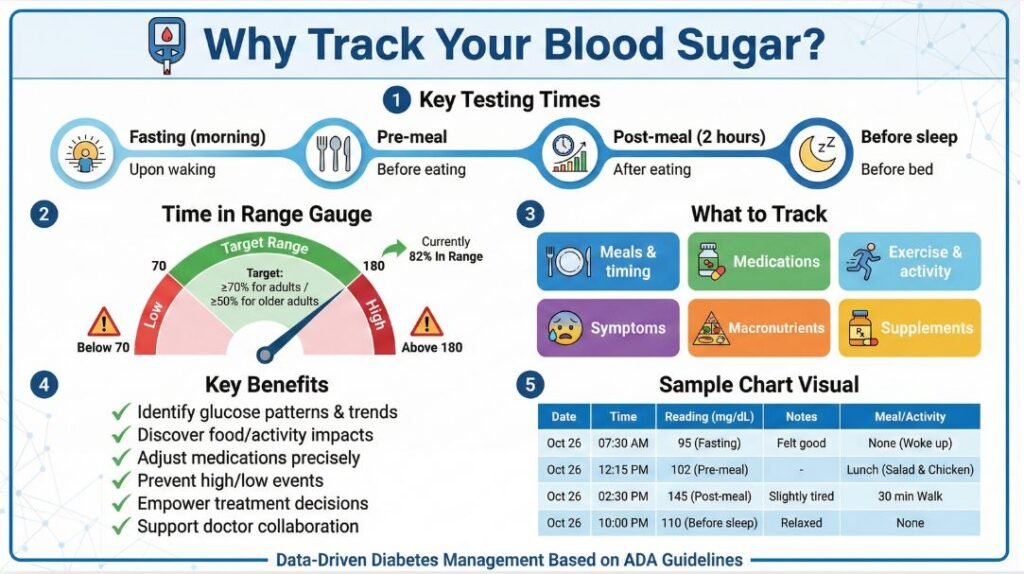
Monitoring your blood sugar provides valuable information about how your body responds to everyday life.
Regular tracking can help you:
- See how meals affect your glucose levels
- Understand the impact of exercise
- Identify patterns of high or low blood sugar
- Evaluate whether medications are working effectively
- Reduce the risk of long-term complications
- Make more informed lifestyle decisions
Many people are surprised to discover how much their readings can vary throughout the day. A blood sugar chart helps turn those fluctuations into useful information.
What Your Blood Sugar Numbers Mean
A single reading provides a snapshot of your glucose level at one moment.
A blood sugar chart shows the bigger picture.
For example, an occasional high reading after a large meal may not be cause for concern. However, consistently elevated readings over days or weeks could indicate that adjustments are needed.
Likewise, one low reading may result from delayed meals or increased activity. Frequent low readings may require changes to medication, meal timing, or other aspects of your management plan.
Blood Sugar Levels and Prediabetes
Prediabetes occurs when blood sugar levels are higher than normal but not yet high enough to be diagnosed as diabetes.
The following fasting blood sugar ranges are commonly used when evaluating prediabetes and diabetes.
| Result | Range |
| Normal fasting glucose | Below 100 mg/dL |
| Prediabetes | 100-125 mg/dL |
| Diabetes | 126 mg/dL or higher |
Many people with prediabetes have no obvious symptoms, which is why testing is important.
Common warning signs may include:
- Increased thirst
- Frequent urination
- Fatigue
- Blurred vision
- Increased hunger
If you are concerned about early signs of elevated blood sugar, read our guide to pre-diabetes symptoms.
Blood Sugar Levels and Diabetes
Consistently elevated blood sugar levels may indicate diabetes. Diagnosis is typically based on blood glucose testing, A1C results, or both. If you are experiencing symptoms such as increased thirst, frequent urination, or unexplained fatigue, speak with your healthcare provider and consider reading our guide to Symptoms of Borderline Diabetes.
Many people first notice these symptoms before receiving a diagnosis.
You can learn more in our article on symptoms of borderline diabetes.
Why Blood Sugar Changes Throughout the Day
It is completely normal for blood sugar levels to fluctuate.
Several factors can influence your readings:
Food Choices
Meals high in refined carbohydrates and added sugars often cause larger spikes in blood sugar.
If you are unsure which foods may be contributing to higher readings, see our guides to foods that raise blood sugar and foods that lower blood sugar.
Physical Activity
Exercise often helps lower blood sugar because your muscles use glucose for energy.
Regular activity can also improve insulin sensitivity over time.
Stress
Physical and emotional stress can increase the release of hormones that raise blood sugar levels.
Illness
Many illnesses can cause temporary increases in blood sugar, even when eating habits remain unchanged.
Sleep
Poor sleep can affect hormone balance and insulin sensitivity, leading to higher glucose readings.
When Blood Sugar Is Too Low
Low blood sugar, known as hypoglycemia, generally occurs when blood glucose falls below 70 mg/dL.
Symptoms may include:
- Shaking
- Sweating
- Dizziness
- Hunger
- Confusion
- Rapid heartbeat
Treating low blood sugar quickly is important to prevent more serious complications.
When Blood Sugar Is Too High
High blood sugar, known as hyperglycemia, can occur when the body does not produce enough insulin or cannot use insulin effectively.
Common symptoms include:
- Increased thirst
- Frequent urination
- Fatigue
- Headaches
- Blurred vision
Persistent high blood sugar should be discussed with your healthcare provider.
Very high readings may require immediate medical attention, especially if accompanied by nausea, vomiting, confusion, or ketones.
How Often Should You Check Your Blood Sugar?
The right testing schedule depends on your situation.
People using insulin often test multiple times per day, including:
- Before meals
- After meals
- At bedtime
- Before and after exercise
People with type 2 diabetes who are not using insulin may test less frequently.
Individuals with prediabetes may only need periodic monitoring based on their healthcare provider’s recommendations.
The goal is to gather enough information to identify meaningful patterns without creating unnecessary stress.
Tips for Keeping Blood Sugar in a Healthy Range
While every situation is different, several habits can support healthier blood sugar levels.
Follow a Balanced Eating Plan
Focus on:
- Vegetables
- Lean proteins
- High-fiber foods
- Healthy fats
- Whole grains
For practical meal-planning guidance, see our diabetes food guide.
Start the Day With a Healthy Breakfast
Your first meal can influence blood sugar throughout the day.
Our guide to the best breakfast for diabetics provides ideas that support more stable glucose levels.
Stay Physically Active
Regular movement helps your body use insulin more effectively and can improve blood sugar control.
Maintain a Healthy Weight
Excess body weight is a major risk factor for insulin resistance and type 2 diabetes.
Learn more about how age and obesity affect diabetes risk.
Take Medications as Prescribed
If you have been prescribed diabetes medications, following your treatment plan consistently is one of the most effective ways to maintain healthy blood sugar levels.
When to Contact Your Doctor
Occasional blood sugar fluctuations are common, especially after meals, during illness, or when your routine changes. However, some situations warrant a conversation with your healthcare provider.
Consider contacting your doctor if:
- Your blood sugar readings are consistently above your target range
- You experience frequent episodes of low blood sugar
- Your blood sugar levels become increasingly difficult to manage
- You notice new or worsening symptoms such as excessive thirst, frequent urination, fatigue, or blurred vision
- You are unsure how to interpret your blood sugar readings
- Your current treatment plan does not seem to be working as expected
Regular checkups and ongoing communication with your healthcare team can help identify problems early and keep your diabetes management plan on track.
Final Thoughts
A blood sugar chart is one of the most useful tools for understanding your health. Rather than focusing on individual numbers, look for patterns that reveal how your body responds to food, exercise, stress, sleep, and medication.
Tracking your blood sugar regularly can help you make informed decisions, work more effectively with your healthcare team, and reduce the risk of long-term complications.
Remember that blood sugar management is a journey. Every reading provides information that can help you move toward better health and greater confidence in managing your condition.
Frequently Asked Questions
What is a normal blood sugar level?
For people without diabetes, a normal fasting blood sugar level is generally below 100 mg/dL. People with diabetes may have different target ranges based on their treatment plan and overall health.
How often should I check my blood sugar?
It depends on your type of diabetes, treatment plan, and healthcare provider’s recommendations.
Is one high blood sugar reading a problem?
Not necessarily. Individual readings can be affected by meals, stress, illness, or activity. Consistent patterns are usually more important than isolated numbers.
Can diet improve blood sugar levels?
Yes. Food choices play a major role in blood sugar management and can significantly affect glucose levels throughout the day.