
Managing diabetes can feel overwhelming at first, especially when it comes to food. Many people worry that they will have to give up all their favorite meals or follow a strict diet forever. The good news is that healthy eating for diabetes is not about perfection or deprivation.
A diabetes-friendly eating plan is about making smarter choices more consistently. The foods you eat can help stabilize blood sugar, improve energy levels, support heart health, and lower the risk of long-term complications.
There is no single “perfect” diabetes diet. Your ideal eating plan depends on your lifestyle, medications, activity level, and overall health goals. Still, certain nutritional principles can help almost everyone with diabetes make better food decisions with more confidence.
For a broader overview of healthy diabetes nutrition, read our complete guide to diabetes diet information.
This guide explains how food affects blood sugar, which foods are most helpful, which foods are best limited, and how to create realistic meals you can enjoy long term.
What Is a Good Diabetes Diet?
A healthy diabetes diet focuses on balanced meals that help stabilize blood sugar levels. Most diabetes meal strategies include non-starchy vegetables, lean proteins, healthy fats, fiber-rich foods, and moderate portions of quality carbohydrates.
Rather than following strict rules, the goal is to build sustainable eating habits that support steady energy levels and long-term blood sugar control.
Key Takeaways
- Carbohydrates affect blood sugar the most, but portion size matters just as much as food choice
- Fiber-rich foods can help slow blood sugar spikes and improve fullness
- Non-starchy vegetables, lean proteins, healthy fats, and whole grains form the foundation of a diabetes nutrition plan
- Highly processed foods, sugary drinks, and refined carbohydrates can make blood sugar harder to control
- Meal planning and portion awareness can make diabetes management feel much easier
- You do not need a “perfect” diet to make meaningful progress
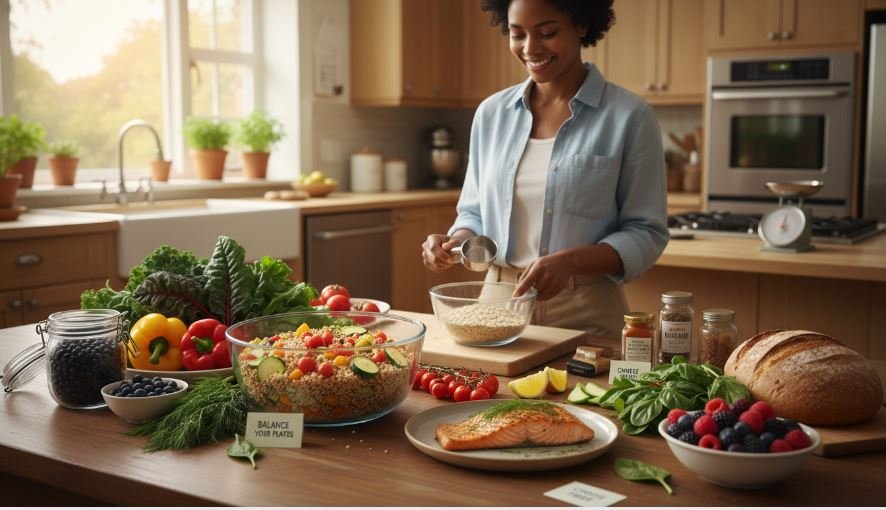
Understanding How Food Affects Blood Sugar
Everything you eat affects your body differently. Some foods raise blood sugar quickly, while others digest more slowly and create a steadier glucose response.
Understanding these differences can help you make food choices that support better blood sugar control throughout the day.
Carbohydrates Have the Biggest Impact
Carbohydrates break down into glucose during digestion. This is why carb-containing foods have the strongest effect on blood sugar levels.
Common carbohydrate foods include:
- Bread
- Rice
- Pasta
- Fruit
- Milk and yogurt
- Beans and lentils
- Potatoes
- Desserts and sugary snacks
Refined carbohydrates like white bread, pastries, candy, and sugary drinks tend to raise blood sugar quickly. Higher-fiber carbohydrates such as oats, beans, quinoa, and vegetables usually digest more slowly.
This does not mean carbohydrates are “bad.” It simply means they should be chosen carefully and eaten in balanced portions.
Protein Helps Support Stable Energy
Protein has very little direct impact on blood sugar. It also helps you feel full longer and can reduce overeating later in the day.
Good protein choices include:
- Chicken breast
- Turkey
- Fish
- Eggs
- Greek yogurt
- Tofu
- Lentils
- Beans
Including protein with meals and snacks often helps create more stable blood sugar patterns.
Healthy Fats Can Improve Satisfaction
Healthy fats slow digestion and help meals feel more satisfying. They also support heart health, which is especially important for people with diabetes.
Good sources include:
- Avocados
- Olive oil
- Nuts
- Seeds
- Salmon and other fatty fish
Healthy fats do not raise blood sugar directly, but portion sizes still matter because fats are calorie-dense.
What This Means for You
You do not need to eliminate entire food groups to manage diabetes successfully.
In most cases, blood sugar control improves when meals contain:
- A moderate portion of quality carbohydrates
- Lean protein
- Fiber-rich vegetables
- Healthy fats
Balanced meals are usually easier to maintain long term than extreme diets.
Best Foods to Include in a Diabetes-Friendly Diet
Some foods are especially helpful for blood sugar management because they provide nutrients, fiber, and steady energy without causing large glucose spikes.
Looking for more blood sugar-friendly food ideas? Explore these foods that lower blood sugar naturally.
Non-Starchy Vegetables
Non-starchy vegetables are one of the best foods for diabetes because they are high in nutrients and fiber while being relatively low in carbohydrates.
Try to fill about half your plate with vegetables at lunch and dinner.
Examples include:
- Broccoli
- Spinach
- Kale
- Cauliflower
- Bell peppers
- Cucumbers
- Zucchini
- Mushrooms
- Asparagus
- Green beans
These foods can help you feel full while supporting more stable blood sugar levels.
Lean Protein Sources
Protein helps support muscle health and improves fullness after meals.
Healthy options include:
- Skinless chicken or turkey
- Fish and seafood
- Eggs
- Tofu and tempeh
- Beans and lentils
- Low-fat Greek yogurt
Fatty fish like salmon, sardines, and trout are especially beneficial because they contain omega-3 fatty acids that support heart health.
High-Fiber Foods
Fiber slows digestion and can reduce rapid blood sugar spikes after meals.
Foods high in fiber include:
- Oats
- Beans
- Lentils
- Chia seeds
- Flaxseeds
- Vegetables
- Berries
- Pears
- Apples with skin
- Whole grains
Many people with diabetes do not get enough fiber, so increasing fiber intake gradually can make a meaningful difference.
Whole Grains and Complex Carbohydrates
Whole grains generally digest more slowly than refined grains.
Better carbohydrate choices include:
- Brown rice
- Quinoa
- Steel-cut oats
- Barley
- Whole grain bread
- Whole wheat pasta
These foods can still raise blood sugar, so portion awareness remains important.
Understanding the Glycemic Index
The glycemic index measures how quickly carbohydrate foods raise blood sugar.
If you want to build meals around slower-digesting carbohydrates, learn more about following a low glycemic diet.
Low glycemic foods digest more slowly and usually create steadier blood sugar levels.
Examples of lower glycemic foods include:
- Beans
- Lentils
- Most vegetables
- Steel-cut oats
- Quinoa
- Berries
Higher glycemic foods include:
- White bread
- Sugary cereals
- Soda
- Candy
- White rice
- Pastries
The glycemic index can be helpful, but it should not be the only thing you focus on. Portion size and meal balance still matter.
Foods to Limit for Better Blood Sugar Control
No food has to be completely forbidden, but some foods are harder to manage consistently when living with diabetes.
Sugary Drinks
Sugary beverages can raise blood sugar very quickly because they contain large amounts of rapidly absorbed sugar without fiber.
Examples include:
- Regular soda
- Sweet tea
- Energy drinks
- Fruit punch
- Sweetened coffee drinks
Water, sparkling water, unsweetened tea, and black coffee are usually better choices.
Refined Carbohydrates
Refined carbohydrates digest quickly and often lead to blood sugar spikes.
Want to better understand which foods may be causing blood sugar spikes? Read our guide to foods that raise blood sugar.
Foods commonly limited include:
- White bread
- White rice
- Pastries
- Cookies
- Donuts
- Sugary cereals
Replacing these foods with higher-fiber alternatives can improve blood sugar stability.
Highly Processed Foods
Many processed foods contain large amounts of sodium, unhealthy fats, and added sugars.
Examples include:
- Frozen dinners
- Packaged snack foods
- Fast food
- Processed meats
- Chips
Eating these foods occasionally is usually manageable, but building your diet around whole foods often makes diabetes easier to control.
Trans Fats and Excess Saturated Fat
People with diabetes have a higher risk of heart disease, so fat quality matters.
Try to limit:
- Fried foods
- Processed baked goods
- Processed meats
- Foods containing partially hydrogenated oils
What This Means for You
You do not need to panic over occasional treats or perfectly control every meal.
Long-term blood sugar management usually improves from consistent habits, not extreme restrictions.
Not sure what your numbers should look like? Review this normal blood sugar levels chart for general target ranges.
Small improvements like drinking fewer sugary beverages or eating more vegetables can add up over time.
Mastering Carbohydrate Counting
Carbohydrate counting helps many people better understand how foods affect blood sugar.
Tracking your glucose levels alongside your meals can be helpful. Use this blood sugar chart to better understand your readings.
This can be especially helpful for people using insulin, but even people with type 2 diabetes may benefit from learning basic carb awareness.
Common Carbohydrate Sources
Carbohydrates are found in:
- Bread
- Pasta
- Rice
- Fruit
- Milk
- Yogurt
- Beans
- Potatoes
- Snack foods
- Desserts
Even healthy carbohydrates affect blood sugar, which is why portion size matters.
Reading Food Labels
Nutrition labels can help you estimate carbohydrate intake more accurately.
Pay attention to:
- Total carbohydrates
- Serving size
- Added sugars
- Fiber content
The total carbohydrate number matters more than “net carbs” for most people with diabetes.
Hidden Sugars to Watch For
Sugar can appear under many names on ingredient lists, including:
- Corn syrup
- Cane sugar
- Honey
- Dextrose
- Maltose
- Agave nectar
- Fruit juice concentrate
Foods marketed as “healthy” can still contain significant added sugar.
Pay Attention to How Your Body Responds
Different foods affect people differently. Two people can eat the same meal and experience different blood sugar responses.
Tracking your blood sugar after meals can help you learn:
- which foods work well for you
- which meals cause spikes
- how portion sizes affect your glucose levels
This can help you make more personalized food choices over time.
Creating a Simple Diabetes Meal Plan
Meal planning can make diabetes management feel far less stressful.
When meals are planned ahead of time, it becomes easier to avoid impulsive food choices and maintain stable blood sugar levels.
The Diabetes Plate Method
The diabetes plate method is one of the simplest meal-planning tools.
Using a standard dinner plate:
- Fill half the plate with non-starchy vegetables
- Fill one quarter with lean protein
- Fill one quarter with carbohydrates or whole grains
This approach helps create balanced meals without complicated calculations.
Smart Meal Prep Strategies
Preparing food ahead of time can reduce stress during busy weeks.
Helpful ideas include:
- Cooking proteins in batches
- Washing and chopping vegetables ahead of time
- Preparing grains like brown rice or quinoa in advance
- Portioning snacks into containers
- Planning meals before grocery shopping
Even simple meal prep can make healthy eating easier and more realistic.
Portion Control Tips That Actually Work
Even healthy foods can affect blood sugar when portions become too large.
Use Your Hand as a Portion Guide
Your hand can be a practical way to estimate portions:
- Palm = protein serving
- Fist = vegetables or carbohydrates
- Thumb = fats like oils or nut butter
This method works well at restaurants and social gatherings.
Restaurant Portions Are Often Too Large
Many restaurant meals contain two or three servings.
Helpful strategies include:
- Asking for a take-home box immediately
- Splitting meals
- Ordering extra vegetables instead of fries
- Keeping sauces and dressings on the side
Eating Out With Diabetes
Dining out does not have to ruin your blood sugar goals.
Better Restaurant Choices
Look for menu items that are:
- Grilled
- Baked
- Roasted
- Steamed
Try to include:
- Lean protein
- Vegetables
- Moderate carbohydrate portions
Common Restaurant Pitfalls
Be careful with:
- Bread baskets
- Sugary drinks
- Oversized portions
- Creamy sauces
- Fried foods
Simple modifications can make restaurant meals much more diabetes-friendly.
Sample Diabetes-Friendly Meal Ideas
Breakfast Ideas
- Veggie omelet with spinach and tomatoes
- Greek yogurt with berries and nuts
- Steel-cut oatmeal with chia seeds
- Whole grain toast with avocado and eggs
Need more morning meal ideas? See our guide to the best breakfast for diabetics.
Lunch Ideas
- Grilled chicken salad with olive oil dressing
- Turkey wrap on a whole grain tortilla
- Quinoa bowl with roasted vegetables and chickpeas
- Salmon salad with mixed greens
Dinner Ideas
- Grilled salmon with roasted broccoli
- Chicken breast with brown rice and vegetables
- Turkey meatballs with zucchini noodles
- Tofu stir-fry with mixed vegetables
Smart Snack Ideas
- Raw vegetables with hummus
- A small handful of almonds
- Greek yogurt
- Apple slices with peanut butter
- Hard-boiled eggs
Final Thoughts
Managing diabetes through food does not require perfection. It requires consistency, awareness, and realistic habits that you can maintain long term.
Start with a few simple changes instead of trying to overhaul your entire diet overnight. Adding more vegetables, reducing sugary drinks, improving portion awareness, and planning meals ahead of time can all make a meaningful difference.
Healthy eating for diabetes is not about punishment or restriction. It is about giving your body the support it needs to feel better, maintain stable energy, and protect your long-term health.
Over time, these choices become easier, more natural, and more sustainable.
Frequently Asked Questions
Can people with diabetes eat carbohydrates?
Yes. Carbohydrates are not forbidden with diabetes. The goal is to choose higher-quality carbohydrates, monitor portions, and balance them with protein, fiber, and healthy fats.
Is fruit bad for diabetes?
Whole fruit can absolutely fit into a diabetes-friendly eating plan. Fruits like berries, apples, pears, and citrus fruits contain fiber and important nutrients. Portion size still matters.
What foods lower blood sugar quickly?
No single food instantly lowers blood sugar. Long-term blood sugar management usually comes from consistent habits such as balanced meals, regular physical activity, medication adherence, and portion control.
Do I need to avoid sugar completely?
Most people with diabetes do not need to completely eliminate sugar forever. However, limiting added sugars and highly processed foods usually helps improve blood sugar control.
Is eating healthy with diabetes expensive?
Not necessarily. Frozen vegetables, beans, oats, eggs, canned tuna, and brown rice are often affordable and nutritious options.