
If you’re over 45, carrying extra weight, or both, your risk of developing type 2 diabetes may be higher than you realize.
The challenge is that this risk builds slowly and often without obvious symptoms. Many people do not realize anything is wrong until blood sugar levels have already been elevated for years.
The good news is that understanding how age and obesity affect diabetes risk gives you the power to take action early. Even small changes can make a meaningful difference.
This guide explains what is happening in your body, why your risk may be increasing, and what you can do about it in a clear, practical way.
Quick Answer: How Age and Obesity Affect Diabetes Risk
Age and obesity increase diabetes risk primarily by reducing your body’s ability to use insulin effectively.
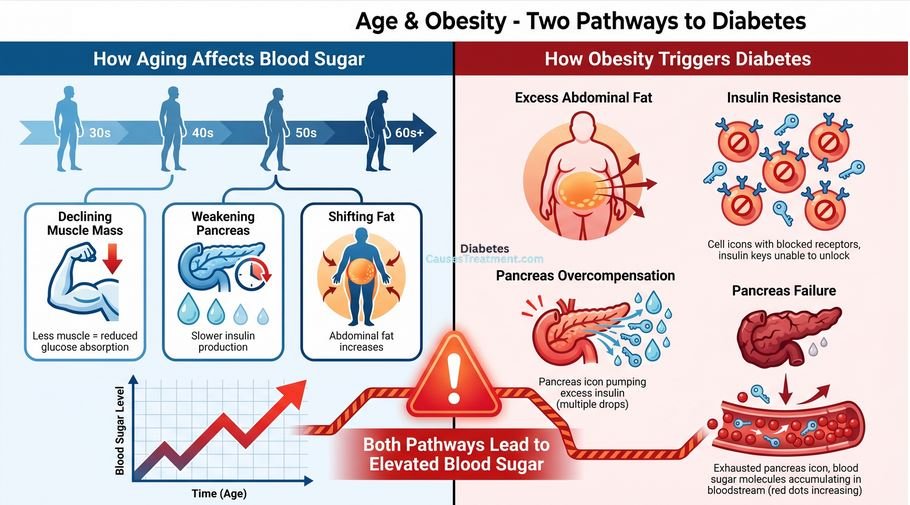
As you age, muscle mass decreases and insulin production becomes less efficient. At the same time, excess body fat, especially around the abdomen, increases insulin resistance.
Together, these changes make it harder for your body to keep blood sugar levels in a healthy range, increasing the likelihood of developing prediabetes and type 2 diabetes.
What This Means for You
If you are over 45 or carrying excess weight, your risk is higher, but it is not fixed.
Many of the factors that drive diabetes risk can be improved through small, consistent lifestyle changes. The earlier you understand your risk, the more options you have to reduce it.
How Age Increases Your Risk of Diabetes
As your body ages, several natural changes make blood sugar regulation more difficult.
Muscle mass tends to decline over time, and muscle is one of the primary places where glucose is used. With less muscle, your body becomes less efficient at clearing glucose from the bloodstream.
The pancreas may also produce insulin more slowly or in smaller amounts. At the same time, fat distribution often shifts toward the abdomen, even without major weight gain.
These changes combine to make blood sugar levels more likely to rise over time. Age is only one part of the picture, however. Genetic and lifestyle diabetes risk factors can also influence your overall likelihood of developing the condition.
How Obesity Increases Diabetes Risk
Obesity is one of the strongest risk factors for type 2 diabetes.
Excess body fat, particularly around the midsection, interferes with how your body uses insulin. This condition is known as insulin resistance.
When your cells do not respond properly to insulin, your body compensates by producing more of it. Over time, the pancreas cannot keep up, and blood sugar levels begin to rise.
This process often develops gradually, which is why many people are unaware it is happening.
What This Means for You
You do not need to reach an ideal weight to see benefits.
Even modest weight loss can significantly improve insulin sensitivity and help stabilize blood sugar levels.
How Age and Obesity Work Together
Age and obesity are powerful risk factors on their own. Together, they create a compounding effect.
As you get older, your body becomes naturally less efficient at managing blood sugar. When excess weight is added, especially around the abdomen, insulin resistance increases even further.
This combination makes it more difficult to maintain stable glucose levels and increases the likelihood of developing type 2 diabetes.
What This Means for You
If both factors apply to you, it does not mean diabetes is inevitable.
It does mean that taking small, consistent steps now can have a larger impact than you might expect.
Insulin Resistance: The Link Between Age, Weight, and Blood Sugar
Insulin resistance is the key mechanism connecting age, obesity, and diabetes.
When your body becomes resistant to insulin, glucose remains in your bloodstream instead of being used for energy. Over time, this leads to elevated blood sugar levels.
Age-related muscle loss and obesity-related inflammation both contribute to this process.
The encouraging part is that insulin resistance can often be improved.
Diet, physical activity, and weight changes all play a role in helping your body respond to insulin more effectively. Food choices are particularly important, and an insulin resistance diet can focus on foods and eating patterns that support healthier blood sugar levels.
Prediabetes: The Early Warning Stage
Prediabetes is the stage where blood sugar levels are higher than normal but not yet in the diabetes range.
This is a critical window where intervention can prevent or delay the development of type 2 diabetes.
Many people with prediabetes have no symptoms, which is why screening is important.
Common indicators include:
- Fasting blood sugar between 100 and 125 mg/dL
- A1C levels between 5.7% and 6.4%
- Weight gain, especially around the abdomen
- Fatigue or low energy
Understanding the symptoms of prediabetes can help you recognize why testing may be appropriate, although many people experience no noticeable warning signs.
What This Means for You
Prediabetes is not a diagnosis you are stuck with.
It is an opportunity to take action before more serious health problems develop.
Why Diabetes Risk Is Increasing in Younger People
Type 2 diabetes is no longer limited to older adults.
Rising rates of obesity have led to increasing cases among teenagers and young adults.
When insulin resistance begins earlier in life, the long-term impact on health can be more significant.
Our guide to adolescent type 2 diabetes takes a closer look at the condition in children and teenagers, including risk factors, symptoms, and prevention.
What This Means for You
If you have children or grandchildren, awareness matters.
Healthy habits early in life can significantly reduce long-term risk.
Practical Steps to Reduce Your Risk
You do not need to make drastic changes to see improvement.
Small, consistent actions are often the most effective.
Focus on Food Quality
Reducing refined carbohydrates and added sugars can help stabilize blood sugar. Learning which foods raise blood sugar can make it easier to identify choices that may have a larger effect on glucose levels.
It can also help to understand which foods to limit with diabetes and what healthier alternatives you can choose instead.
Stay Physically Active
Regular movement helps your body use glucose more efficiently.
Walking, swimming, and light strength training are all effective options.
Aim for Modest Weight Loss
Losing even 5 to 7 percent of your body weight can improve insulin sensitivity.
Monitor Your Blood Sugar
Tracking your levels helps you understand how your body responds to different foods and habits.
If you are unsure what different readings mean, a blood sugar chart can help put fasting, after-meal, and other glucose numbers into context.
Get Regular Screening
If you are over 45 or have risk factors, routine testing helps catch issues early.
What This Means for You
You do not need a perfect plan.
Start with one or two changes that feel manageable and build from there.
Recognizing Early Warning Signs
Many people do not notice symptoms until blood sugar has been elevated for some time.
However, some early signs include:
- Increased thirst
- Frequent urination
- Fatigue
- Blurred vision
- Slow healing cuts
If you notice these symptoms, it is important to speak with a healthcare provider. You can also learn more about the warning signs of diabetes and when symptoms may warrant testing.
You Don’t Have to Be Perfect
You may not get everything right, and that is okay.
Improving your health is not about perfection. It is about consistency.
Small changes, repeated over time, lead to meaningful results.
Key Takeaways
Age and obesity both increase the risk of developing type 2 diabetes.
Insulin resistance is the key link between these risk factors and rising blood sugar.
Prediabetes is an early stage where action can prevent progression.
Even modest weight loss and lifestyle changes can significantly reduce risk.
Consistent habits matter more than perfect ones.
Frequently Asked Questions
At what age does diabetes risk increase
Risk begins to rise around age 45 and increases further after 65.
Does obesity always lead to diabetes
No. However, it significantly increases the risk, especially when combined with other factors.
Can lifestyle changes really reduce diabetes risk
Yes. Research shows that modest weight loss and increased activity can reduce risk by more than half in high-risk individuals.
Can younger people develop type 2 diabetes
Yes. Rising obesity rates have led to more cases in younger populations.
Final Thoughts
Understanding how age and obesity affect diabetes risk gives you a clear starting point.
You cannot change your age, but you can influence many of the factors that affect your health.
Start small. Stay consistent. And take one step at a time toward better blood sugar control and long-term well-being.