
If you have diabetes, you do not need a long list of foods that you can never eat again. But some foods are worth limiting because they can make blood sugar harder to manage or contribute to other health problems associated with diabetes.
Sugary drinks, refined carbohydrates, highly processed snacks, fried foods, processed meats, and foods high in added sugar or sodium are among the foods to be most careful with. That does not mean an occasional serving will ruin your diabetes management. Your overall eating pattern, portion sizes, medications, activity level, and individual blood sugar response all matter.
The goal is not to make food something you fear. It is to understand which foods deserve a smaller place in your diet and what you can choose more often instead.
Quick Answer
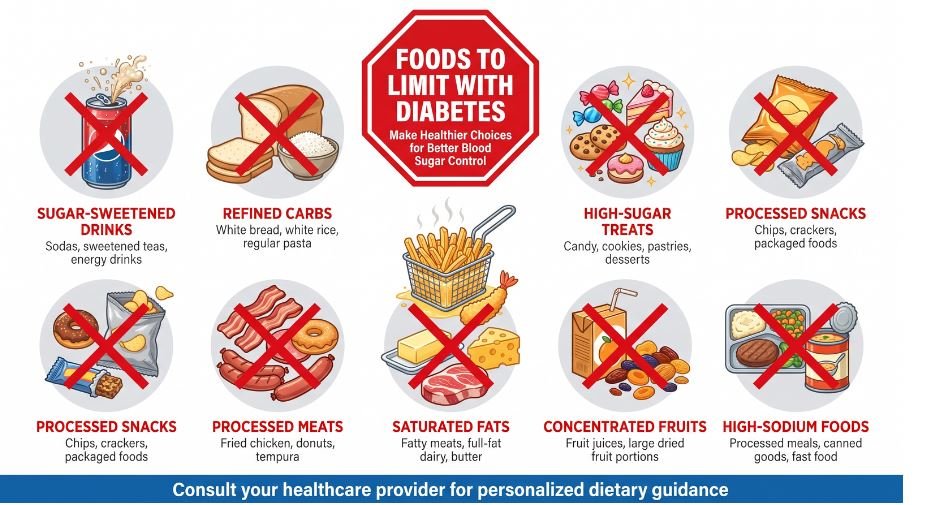
The foods people with diabetes should generally limit include:
- Sugar-sweetened drinks
- Refined carbohydrates such as white bread and white rice
- Candy, cookies, pastries, and other foods high in added sugar
- Highly processed snack foods
- Deep-fried foods
- Processed meats such as bacon, sausage, and hot dogs
- Foods high in saturated fat
- Fruit juice and large portions of dried fruit
- High-sodium processed and convenience foods
These foods do not all affect diabetes in the same way. Some can raise blood sugar quickly, while others are more concerning because they contribute excess calories, saturated fat, or sodium. You do not necessarily need to eliminate them completely. Portion size, frequency, and what you eat with them can make a significant difference
Why Certain Foods Are Harder to Manage With Diabetes
Carbohydrates have the most direct effect on blood glucose because your body breaks them down into glucose during digestion. But the amount and type of carbohydrate matter.
Foods made with refined grains or large amounts of added sugar often contain relatively little fiber. They can therefore be digested more quickly than higher-fiber carbohydrate foods. If you would like a deeper explanation of how different foods affect glucose, see Foods That Raise Blood Sugar.
Blood sugar is only part of the picture.
People with diabetes also have an increased risk of cardiovascular disease. That makes the overall nutritional quality of your diet important. Foods high in saturated fat, sodium, and excess calories may deserve limiting even when they do not cause an immediate blood sugar spike.
The most useful question, therefore, is not simply, “Does this food contain carbohydrates?” It is:
How does this food fit into my overall diabetes eating plan?
Sugary Drinks
Sugar-sweetened beverages are one of the first things worth reducing if you are trying to manage blood sugar.
Regular soda, sweet tea, lemonade, energy drinks, sports drinks, sweetened coffee beverages, and many bottled fruit drinks can deliver a large amount of carbohydrate in a short period of time. Because beverages generally contain little or no fiber, the sugar can be absorbed quickly.
They can also add substantial calories without making you feel as full as solid food.
Better Choices
For everyday hydration, consider:
- Water
- Sparkling water without added sugar
- Unsweetened iced or hot tea
- Coffee without large amounts of added sugar
- Water flavored with lemon, lime, cucumber, or berries
If you regularly drink sugar-sweetened beverages, replacing even some of them with unsweetened alternatives can be a practical first step.
Refined Carbohydrates
White bread, white rice, many crackers, regular bagels, and other foods made primarily with refined flour can be difficult to manage in large portions.
During processing, refined grains lose much of their natural fiber. Fiber helps slow digestion, which is one reason higher-fiber carbohydrate choices may produce a more gradual blood glucose response.
Instead of thinking of all carbohydrates as foods to avoid, focus on carbohydrate quality and portion size.
Good alternatives can include:
- 100% whole-grain bread
- Brown rice
- Quinoa
- Barley
- Whole-grain pasta
- Beans and lentils
The glycemic index is one tool that can help you understand why carbohydrate foods affect blood sugar differently. Our Glycemic Index for Diabetes guide explains how it works and, importantly, where its limitations are.
Candy, Cookies, Cakes, and Pastries
Desserts and sweets do not have to disappear completely when you have diabetes, but they are foods to eat thoughtfully.
Candy, cookies, cakes, doughnuts, pastries, and similar foods often combine refined carbohydrates with substantial amounts of added sugar. Many baked desserts also contain considerable saturated fat.
The issue is not that eating one cookie is inherently dangerous. The problem is how easily these foods can add large amounts of carbohydrate and calories without providing much fiber or other nutritional value.
If you want something sweet, a smaller portion can often fit into an overall diabetes eating plan. It may also help to eat dessert as part of a balanced meal rather than treating sweets as an unrestricted snack.
Highly Processed Snack Foods
Potato chips, cheese puffs, many crackers, snack cakes, and similar packaged foods can be easy to overeat.
Depending on the product, they may combine refined carbohydrates, sodium, added sugars, and saturated fat while providing relatively little fiber or protein.
This is also an area where reading the Nutrition Facts label is more useful than judging a food by claims on the front of the package. Terms such as “natural,” “multigrain,” or “made with whole grains” do not automatically make a product a good choice for blood sugar management.
When comparing packaged snacks, pay particular attention to:
- Serving size
- Total carbohydrate
- Dietary fiber
- Added sugars
- Saturated fat
- Sodium
A snack that contains fiber and protein may be more satisfying than one composed mainly of refined starch.
Sweetened Breakfast Foods
Breakfast foods deserve some attention because many products that appear healthy can contain considerable amounts of refined carbohydrate or added sugar.
Sugar-sweetened cereals, flavored instant oatmeal, pastries, doughnuts, pancakes with large amounts of syrup, and sweetened coffee drinks can make it easy to consume a large carbohydrate load early in the day.
Plain oatmeal, eggs, unsweetened Greek yogurt, whole-grain toast, nuts, seeds, berries, and non-starchy vegetables provide more options for building a balanced breakfast.
For specific meal ideas and combinations, see Best Breakfast for Diabetics.
Fried Foods
French fries, fried chicken, fried fish, onion rings, doughnuts, and other deep-fried foods are worth limiting, but not simply because they are “bad for blood sugar.”
Frying substantially increases the calorie and fat content of many foods. Breaded fried foods can also contain a significant amount of refined carbohydrate.
Regularly eating a diet high in fried foods can make weight management and cardiovascular health more difficult, both of which are important considerations for people with diabetes.
Instead of deep frying, try:
- Baking
- Roasting
- Grilling
- Broiling
- Air frying with a small amount of oil
The underlying food matters too. A grilled piece of fish, for example, has a very different nutritional profile from heavily breaded and deep-fried fish served with fries.
Processed Meats and Fatty Cuts of Meat
Bacon, sausage, hot dogs, salami, and other processed meats do not typically cause the rapid glucose increase associated with sugary or refined carbohydrate foods. They are worth limiting for different reasons.
Many processed meats are high in sodium and saturated fat. Diets containing large amounts of processed meat are also associated with poorer cardiovascular and metabolic health.
Fatty cuts of red meat can contribute substantial saturated fat as well.
You do not necessarily need to eliminate red meat. Instead, consider eating processed meats less often, choosing leaner cuts, and rotating in other protein sources such as:
- Fish
- Skinless poultry
- Beans
- Lentils
- Tofu
- Eggs
- Other plant-based proteins
This is an important distinction in a foods-to-limit article: not every food on the list is here because it directly raises blood sugar.
Foods High in Saturated Fat
Having diabetes makes heart health especially important.
Butter, heavy cream, fatty meats, some cheeses, ice cream, and certain processed foods can contain substantial amounts of saturated fat.
That does not mean dairy products or all higher-fat foods need to be avoided. Unsaturated fats from foods such as nuts, seeds, avocados, olive oil, and fish can be part of a healthy eating pattern.
When choosing dairy products, pay attention to both saturated fat and added sugar. For example, a lower-fat yogurt that contains a large amount of added sugar is not automatically a better choice than an unsweetened alternative.
Foods Containing Trans Fats
Artificial trans fats have largely disappeared from the U.S. food supply, so they are much less common than they once were.
However, it is still reasonable to check ingredient lists on highly processed foods. If a product contains partially hydrogenated oil, it contains a source of artificial trans fat.
Trans fats are particularly undesirable because of their effects on cardiovascular health. Since heart disease risk is already elevated in people with diabetes, avoiding artificial trans fats when encountered is a sensible precaution.
Fruit Juice and Dried Fruit
Fruit does not need to be avoided simply because you have diabetes.
In fact, whole fruit can be an excellent source of vitamins, minerals, fiber, and other beneficial nutrients. The more important distinction is the form and portion of fruit you consume.
Fruit Juice
Juice removes much of the fiber found in whole fruit and makes it easy to consume the carbohydrate from several pieces of fruit very quickly.
For example, drinking a glass of orange juice takes only a few minutes, while eating the equivalent amount of whole oranges would take longer and would generally be more filling.
For everyday fruit consumption, whole fruit is usually a better choice than juice.
Dried Fruit
Dried fruit retains nutrients, but removing the water makes the carbohydrate much more concentrated by volume.
That means a small handful of raisins or dried cranberries can contain considerably more carbohydrate than you might expect from the portion size. Some dried fruits also contain added sugar.
Dried fruit can still fit into a diabetes eating plan. The key is paying attention to the serving size rather than assuming that it is off-limits.
High-Sodium Processed Foods
Sodium does not directly raise blood glucose, but that does not make it irrelevant to diabetes.
High blood pressure commonly occurs alongside diabetes, and both conditions increase cardiovascular risk. That makes excessive sodium intake an important consideration.
Some of the biggest sources can include:
- Canned soups
- Instant noodles
- Frozen dinners
- Processed meats
- Salty snack foods
- Soy sauce and other salty condiments
- Restaurant and fast foods
When buying packaged foods, compare labels. Sodium can vary considerably between seemingly similar products.
Reduced-sodium versions can help, as can preparing more foods at home where you control the amount of salt.
Foods You Do Not Need to Automatically Avoid
A diabetes diagnosis sometimes leads people to eliminate foods unnecessarily.
In most cases, you do not automatically have to avoid:
- Fruit
- Potatoes
- Bread
- Pasta
- Rice
- Dairy products
- All desserts
- All carbohydrates
Instead, consider the type of food, portion size, total carbohydrate, fiber content, and how it fits with the rest of your meal.
This distinction is important because an overly restrictive diet can be difficult to maintain and may unnecessarily eliminate nutritious foods.
If you are unsure how to put individual foods together into meals, our Diabetes Food Guide provides a broader look at building a balanced eating pattern.
Simple Food Swaps That Can Make a Difference
Improving your diet does not require replacing everything you eat at once. A few practical substitutions can make your everyday meals more diabetes-friendly.
| Instead of | Consider |
|---|---|
| Regular soda | Water, sparkling water, or unsweetened tea |
| White bread | 100% whole-grain bread |
| Large serving of white rice | Smaller portion or a higher-fiber grain |
| Sweetened cereal | Higher-fiber, lower-added-sugar cereal |
| Flavored oatmeal | Plain oatmeal with berries and nuts |
| Fruit juice | Whole fruit |
| Deep-fried chicken | Baked, grilled, or air-fried chicken |
| Bacon or sausage every morning | Eggs, lean protein, or occasional processed meat |
| Sweetened yogurt | Plain yogurt with fresh fruit |
| Salty packaged snacks | Nuts, vegetables with hummus, or another minimally processed snack |
The best substitutions are the ones you actually enjoy enough to continue eating.
Portion Size Still Matters
Even nutritious foods can affect blood glucose when portions contain more carbohydrate than your body can comfortably manage.
One simple approach is the diabetes plate method:
- Fill half the plate with non-starchy vegetables.
- Fill one-quarter with a lean protein.
- Fill the remaining quarter with a carbohydrate food.
This is not the only way to eat with diabetes, but it can provide an easy visual starting point without requiring you to weigh and measure every ingredient.
Your own glucose readings can also provide useful information. Two people can eat the same meal and experience different blood sugar responses.
If you want a broader explanation of how to structure an eating pattern rather than simply which foods to limit, see Diabetes Diet Information.
Do You Have to Completely Give Up Your Favorite Foods?
Usually, no.
Diabetes management is not about eating perfectly at every meal. It is about developing an eating pattern that helps you manage blood glucose while also supporting your weight, blood pressure, cholesterol, and overall health.
How often you eat a food, how much you eat, and what you eat with it all matter.
A small serving of dessert after a balanced meal, for example, is different from regularly drinking large sugar-sweetened beverages throughout the day.
If a favorite food causes a larger glucose response than you would like, you can experiment with a smaller portion, eat it less frequently, or combine it differently with the rest of your meal.
How to Decide Which Foods You Should Limit
General recommendations are useful, but diabetes is highly individual.
Your food choices may depend on:
- Whether you have type 1 diabetes, type 2 diabetes, prediabetes, or gestational diabetes
- The medications or insulin you use
- Your blood glucose targets
- Your activity level
- Your weight and health goals
- Other conditions such as kidney disease, high blood pressure, or high cholesterol
- Your culture and food preferences
Pay attention to your own blood glucose response rather than assuming that every food affects everyone the same way.
A registered dietitian nutritionist, particularly one experienced in diabetes care, can help you develop an eating pattern that meets your nutritional needs without unnecessarily eliminating foods you enjoy.
Key Takeaways
There is no universal list of foods that every person with diabetes must completely avoid.
The foods most worth limiting tend to be those that contain large amounts of added sugar, refined carbohydrates, sodium, saturated fat, or calories without providing much fiber or nutritional value.
Sugar-sweetened drinks, highly refined carbohydrates, sweets, processed snacks, deep-fried foods, processed meats, fruit juice, and high-sodium convenience foods are good places to start.
At the same time, foods such as fruit, bread, pasta, rice, and potatoes do not automatically need to disappear from your diet. Portion size, food quality, and the overall composition of your meal matter.
If you are just beginning to change the way you eat, do not try to overhaul your entire diet overnight. Choose one or two changes that feel realistic and build from there.
Frequently Asked Questions
What are the worst foods for diabetes?
There is no single food that is “worst” for everyone with diabetes. Foods that are usually worth limiting include sugar-sweetened beverages, sweets high in added sugar, refined carbohydrates, highly processed snacks, deep-fried foods, and processed meats.
The amount you eat and how frequently you eat these foods matter.
What foods raise blood sugar the fastest?
Foods and drinks containing rapidly digested carbohydrates can cause blood glucose to rise quickly. Examples include regular soda, candy, some sweetened cereals, white bread, and other foods high in refined carbohydrates or added sugars.
The actual response varies from person to person.
Can people with diabetes eat carbohydrates?
Yes. Having diabetes does not mean you need to eliminate carbohydrates.
Choosing higher-fiber carbohydrate foods, watching portion sizes, and balancing carbohydrates with protein, vegetables, and healthy fats can make blood glucose easier to manage. A Low Glycemic Diet is one approach some people use when choosing carbohydrate foods.
Can people with diabetes eat fruit?
Yes. Whole fruit can be part of a healthy diabetes eating pattern.
Whole fruit generally provides more fiber and satiety than fruit juice. Portion size still matters because fruit contains carbohydrate.
Should people with diabetes avoid sugar completely?
Not necessarily. Added sugars should generally be limited, but a person with diabetes does not usually need to maintain a completely sugar-free diet.
A small amount of added sugar can sometimes fit into an otherwise balanced eating plan. Total carbohydrate, portion size, and your individual glucose response are more useful considerations than labeling a food simply “allowed” or “forbidden.”
Final Thoughts
Knowing which foods to limit with diabetes should make eating less confusing, not more restrictive.
Start with the choices that can have the biggest impact. Drink fewer sugar-sweetened beverages, choose higher-fiber carbohydrates more often, reduce heavily processed foods, and pay attention to portions.
Then look at the bigger picture.
The best diabetes eating plan is not the one with the longest list of forbidden foods. It is one that helps you manage your blood sugar, supports your overall health, includes foods you enjoy, and is realistic enough to follow over the long term.