Diabetes is a metabolic disease characterized by elevated blood sugar and impaired insulin production, and it has been recognized for centuries. Researchers from medical centers and universities continue to publish new studies and clinical trials claiming a potential new treatment for diabetes. Though promising, none of these articles has delivered a definitive cure or a therapy that fully restores beta cell function or controls glucose levels in all patients.
In the United States, both type 1 and type 2 diabetes kill over 70,000 people every year, making high blood sugar a top-five risk factor for heart disease and premature death. However, progress in diabetes research, supported by programs from the American Diabetes Association (ADA), is accelerating. Over the past 20 years, numerous clinical trials and medical studies have launched new programs and treatment approaches focused on preserving immune system balance, protecting islet cells, and improving weight control in children and adults. Some of these innovative therapies show real potential to reverse glucose dysregulation and restore cell function:
Gastric Bypass
Gastric bypass (controversial new cure for diabetes) – In 1999, New York surgeon Francesco Rubino stumbled upon a surprising medical finding. While performing gastric bypass surgery to address obesity and reduce excess weight, he noticed that many patients experienced immediate normalization of blood sugar and a dramatic improvement in insulin sensitivity. Within weeks, these patients appeared to have full glucose control and no longer required insulin injections.
Comparing his observations to experimental stomach and intestinal operations from the 1940s, Rubino conducted follow-up animal studies in mice and pigs to test whether fat removal or altered gut hormones were responsible for the diabetes cure. His conclusion: it’s the alteration of the intestinal tract itself that triggers hormonal changes—affecting islet cell function and insulin-producing beta cells—rather than weight loss alone. This unexpected therapy has sparked debate in the medical community, as critics point to the risks and long-term impact on heart health and nutrient absorption. Read the full study in this online article: gastric bypass diabetes cure.
The Edmonton Protocol
Injection of insulin-secreting cells (pancreatic transplant as a new cure for diabetes) – Known as the Edmonton Protocol and carried out in the late 1990s, this clinical treatment involved physicians infusing islets of Langerhans—clusters of insulin-producing beta cells—into the patient’s portal vein leading to the liver. These islets came from donor pancreases and were transplanted to replace lost cell production.
In the initial trial, seven patients with severe type 1 diabetes experienced dramatic improvements: stabilized blood sugar levels, restored C-peptide production, and elimination of daily insulin injections. Although long-term follow-up revealed that only 8% of patients remained insulin-free after a year, those responders showed sustained glucose control, preserved cell function, and a reduced risk of heart and kidney complications. The primary limitation is donor availability, prompting researchers to explore stem cell-derived islet transplants and immune tolerance therapies to increase future transplant programs.
Immune System Reprogramming
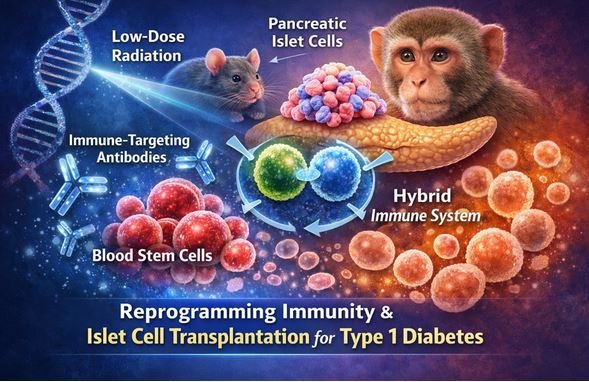
More recently, researchers have explored combining immune system reprogramming with pancreatic islet cell transplants in the treatment of type 1 diabetes. A Stanford Medicine study demonstrated how a gentler approach—low-dose radiation, immune-targeting antibodies, and blood stem cell transplantation—could both prevent and cure diabetes in mice and nonhuman primates by creating a hybrid immune system.
This mixed chimerism program allows donor and recipient immune cells to co-exist, protecting transplanted islets from autoimmune attack without lifelong immune suppression. Early trials in animal models showed normalized blood glucose, preserved beta cell mass, and improved heart and kidney function. Researchers are now designing clinical trials to test this therapy in patients, with the potential to transform future medicine by re-educating the immune system and restoring endogenous insulin production. Source: Stanford Medicine article.
Dorzagliatin
In the context of type 2 diabetes, innovative developments also highlight drugs that modify disease progression rather than just lower blood sugar. One such breakthrough is dorzagliatin, a glucokinase activator recently approved in China. By restoring glucose sensing in pancreatic beta cells and liver metabolism, this therapy stabilizes blood glucose levels and enhances insulin production, offering the possibility of sustained remission.
Clinical studies show improved β-cell function, reduced insulin resistance, and lower post-meal sugar spikes, contributing to weight control and reduced cardiovascular risk. This new approach to diabetes management represents a significant leap in medical treatment, with researchers hopeful about its potential in global care protocols. Source: Nature article.
Advanced Continuous Glucose Monitoring Systems
Additionally, ongoing research led by the American Diabetes Association (ADA) shows progress in next-generation diabetes management solutions such as advanced continuous glucose monitoring systems. Using stable, non-enzymatic molecules, these devices can provide accurate real-time blood sugar readings over extended periods without frequent calibrations.
Improved sensor performance helps patients, including children and adults at high risk, better track glucose levels, adjust insulin therapy, and optimize nutrition and exercise to reduce long-term complications. ADA-supported clinical trials and technology programs are evaluating integration with automated insulin delivery pumps to create closed-loop systems that further enhance care. These medical advancements promise to revolutionize diabetes management and patient quality of life. Source: ADA research advances.
These discoveries and other promising approaches offer new hope to millions of patients and families searching for diabetes care that can reduce insulin dependence, restore cell function, and lower long-term risks. Continued investment in medical research, clinical trials, and innovative therapy programs, from stem cell-derived islets to glucokinase activators, positions the future of diabetes treatment toward more effective, accessible, and durable cures.